
Native Plants for Beautiful and Beneficial Yards
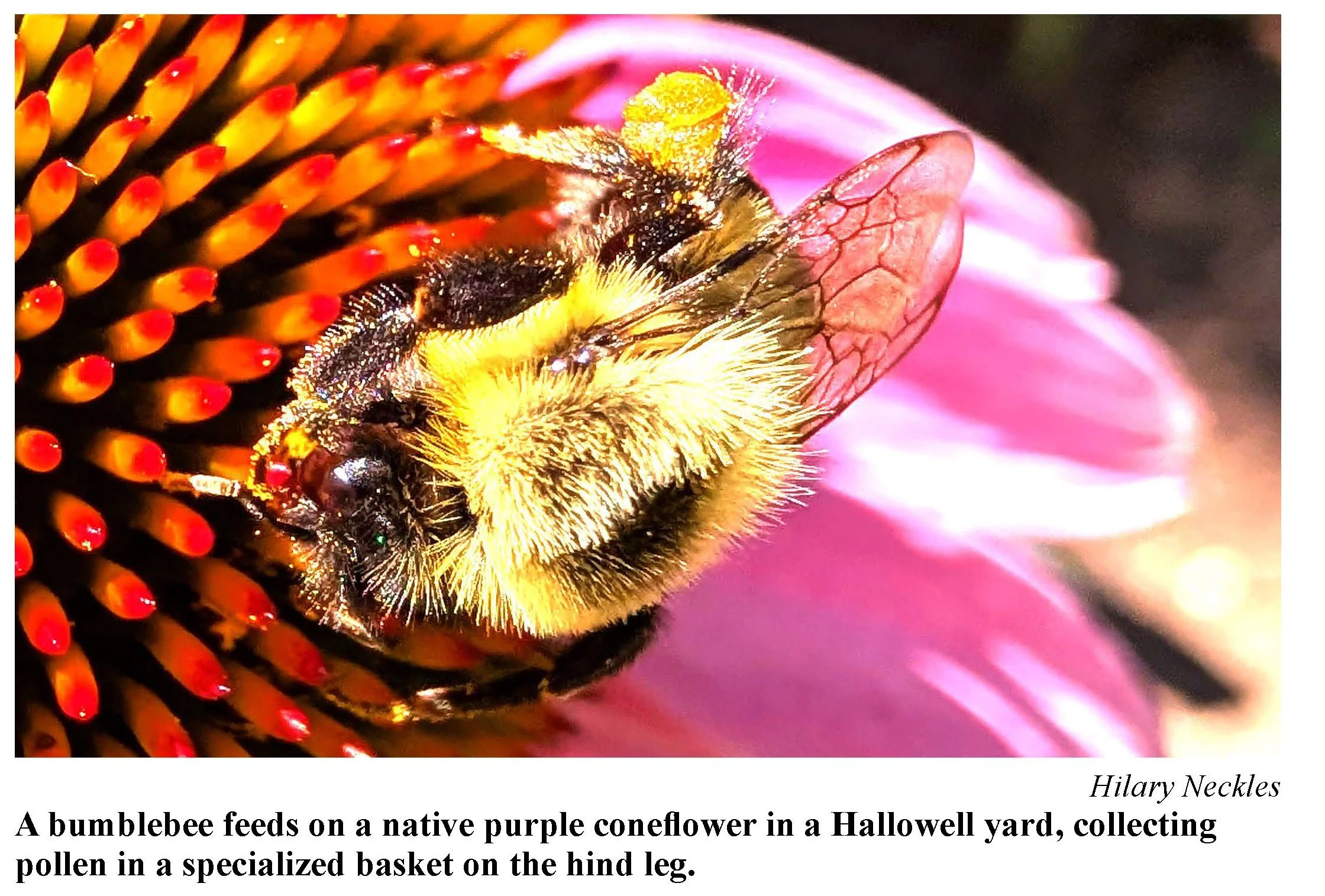
By Judith Graber
When my husband and I moved into a new house in Hallowell in 2020, our property had a lot of lawn. We knew lawns aren’t especially ecologically friendly but didn’t know how to transform our yard into a healthier environment. Then we attended a workshop hosted by the Hallowell Conservation Commission that featured local ecologist, Deborah Perkins.
We learned why an eco-friendly yard matters and how replacing turf grass with native plants at a slow but steady pace can lead to big changes. Once native plants are established, they use much less water than many non-native landscaping plants, especially most of the grasses used for lawns. Native plants also resist disease, filter pollutants from runoff before they reach our waterways, and, importantly, provide food and shelter for pollinators.
Pollinators are the animals that move pollen either within the same flower or from one flower to another, and in the process make seeds, fruits, and new plants. They can be insects, like bees and butterflies; birds, and even some small mammals, like bats. We all rely on pollinators for many of our food crops, and they are also essential to maintaining flowering trees, woodlands, meadows, and of course, our gardens. Native plants and native pollinators evolved together over thousands of years. The food and shelter that native plants provide tend to be better suited for pollinators than nonnative plants. In fact, non-native plants are often largely inedible to insect pollinators.
Why does this matter? Maine, like almost everywhere else on our planet, is experiencing a dramatic decline in the numbers and types of pollinators due to habitat loss, the loss of native plants, climate change, and pesticide use. One thing we all can do to help increase pollinator abundance is plant native plants. To make our yard more eco- and pollinator-friendly, we started by learning what plants were already there. We encouraged the native plants and removed the more invasive non-native plants, like bittersweet. We then added a few native flowering plants to our existing garden beds: perennials like cone flowers, yarrow, and milkweed, and two baby shrubby St. John’s worts that have beautiful little yellow flowers.
The explosion of color was awesome, but what really exploded was the number and types of bees and other pollinators buzzing around them. When I looked closely, I saw that there were different kinds of bumble bees. There are 17 kinds of bumblebees that have been recorded in Maine including little fluorescent green bees. Large proboscis moths (aka hummingbird moths), tiny blue and white moths, and swallowtail and monarch butterflies all started showing up. By adding just a few plants, we had an explosion of pollinators!
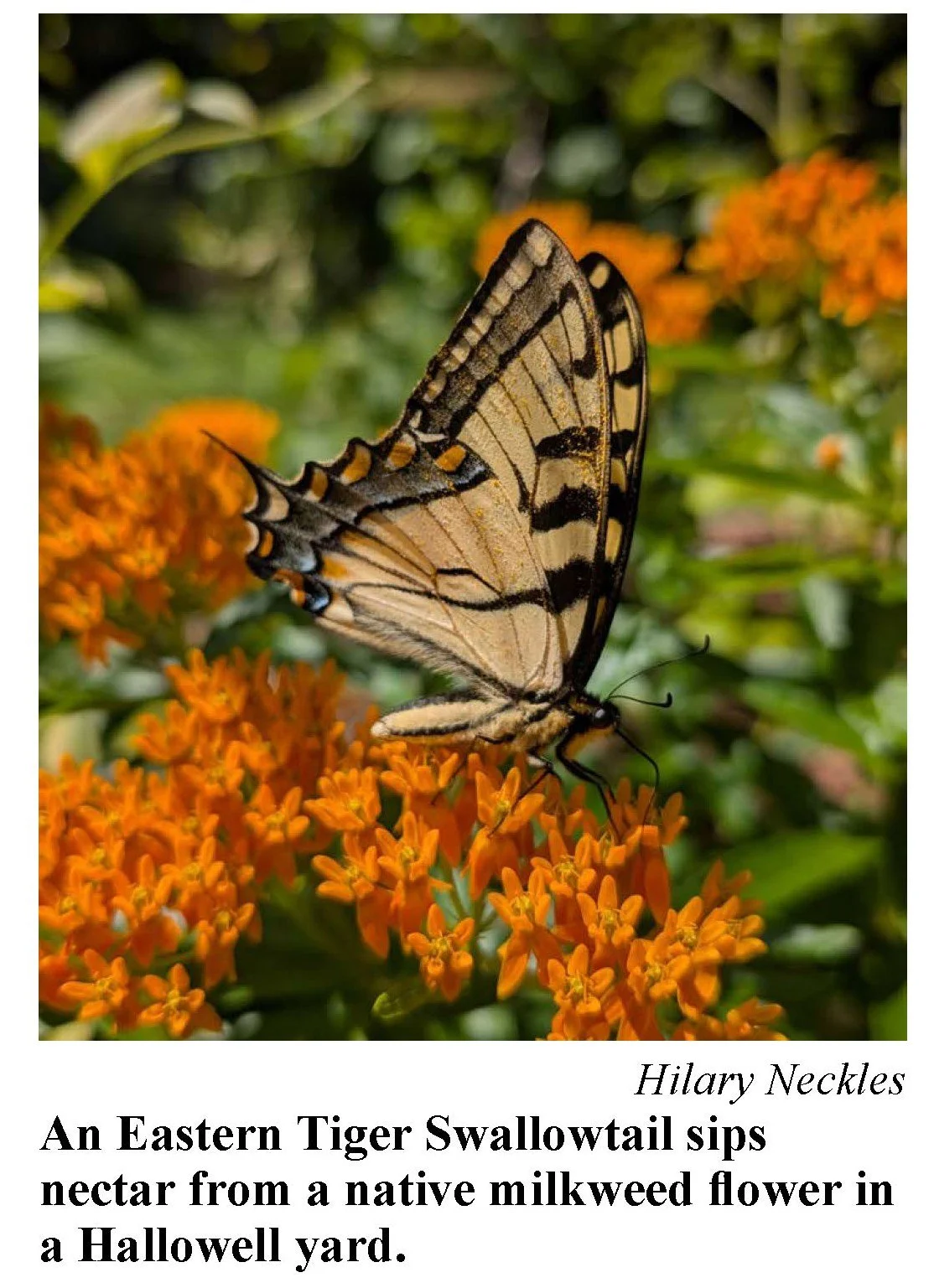
As we have slowly replaced sections of grass with native flowers, shrubs, and trees, we continue to see more pollinators. We also see an increased diversity of birds, because almost all our songbirds raise their young on caterpillars, and most of our North American caterpillars need specific native plants to feed on.
Most importantly, we have learned we can make a difference. Native planting provides valuable resources for pollinators and birds. Even a small flower bed or plants in containers can help. You’ll be amazed at their beauty and thrilled by the pollinator visitors you will attract. For links to native plant resources, visit the Hallowell Conservation Commission website or email HallowellConservation@gmail.com.