
The Story of the Stevens School
By Barbara Williams
If you’ve had a chance to wander through the quiet, shady paths of Stevens Commons, or visit any of the offices or homes in the graceful Victorian buildings, you can’t help but wonder what this place was like 150 years ago, when it first became a school for girls in trouble.
The prosperity that built Hallowell in the days of shipping and granite produced poverty in its wake, as all prosperity seems to do. In the early 19th Century, migrants hurried to Hallowell in hopes of work and farmland. For most, their hopes were realized, but some got lost in the boom. When times got hard, as they often did—a flood, a bout of scarlet fever—children were orphaned and wives were left without husbands.
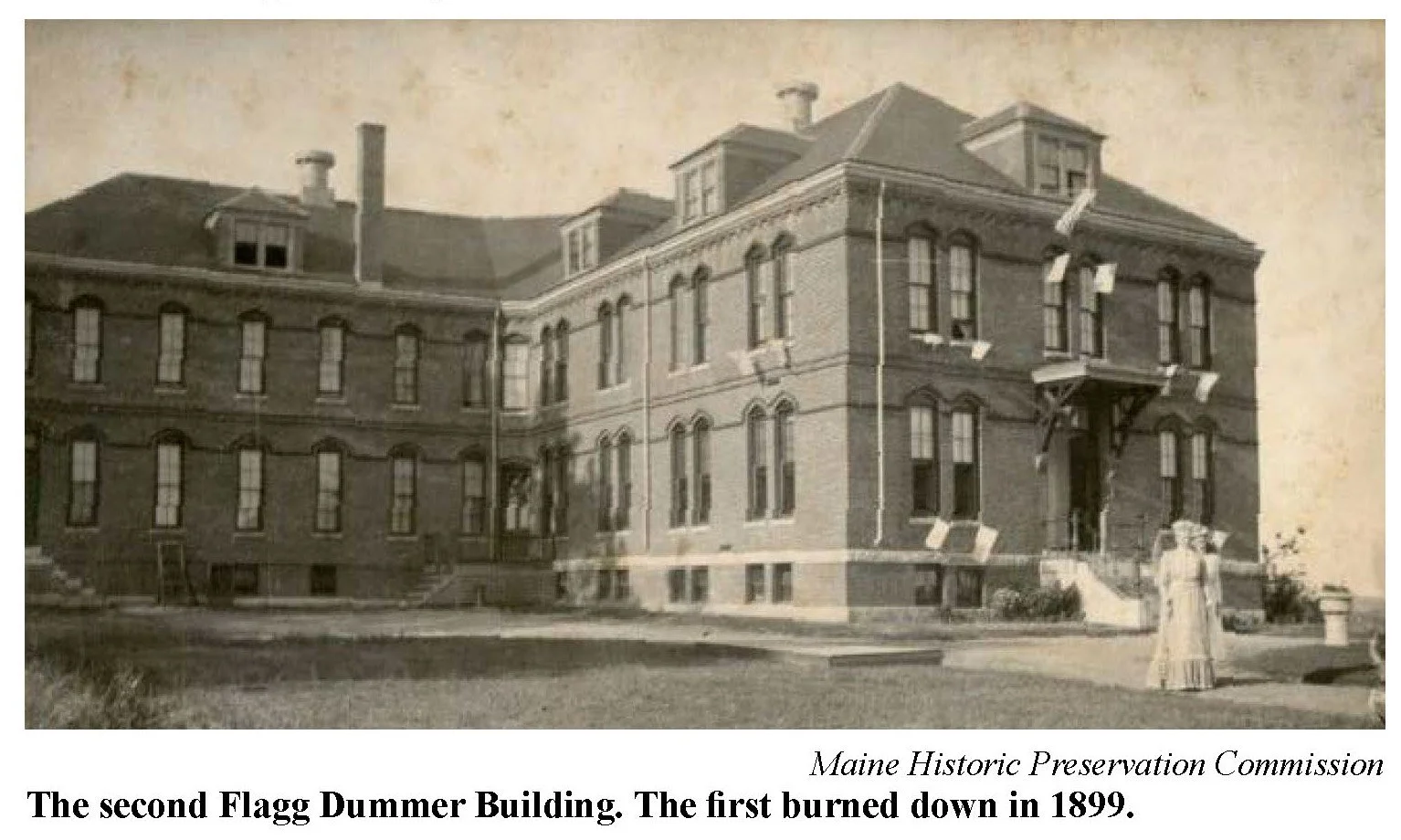
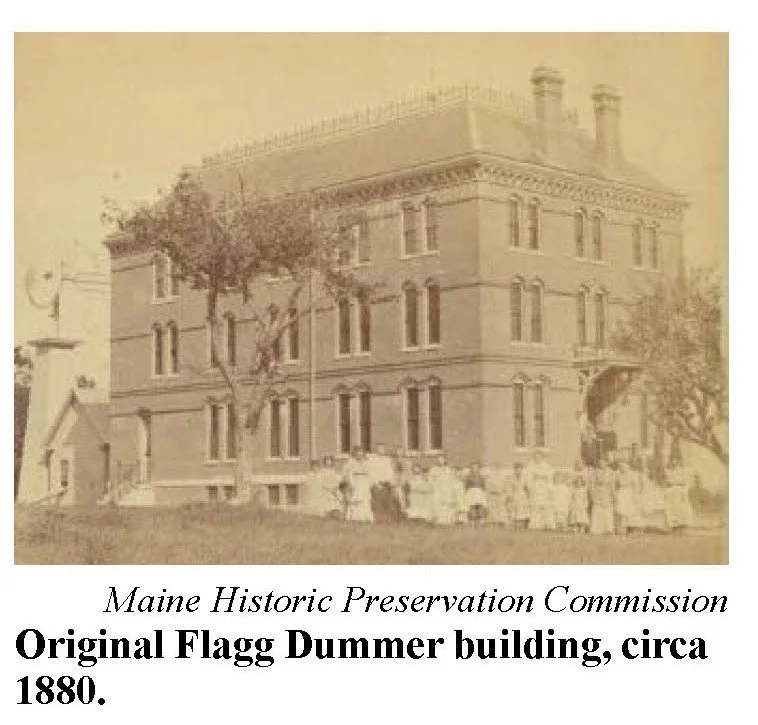
However, Hallowell had no shortage of benevolence. Two women, Mary Flagg and Almira Dummer, figured out a way to help the young, sick and forlorn. Mary donated $10,000 and Almira sold the 54 acres atop Howard Hill at a bargain price. With the State Legislature’s approval, the Maine Industrial School for Girls was incorporated, and the first group moved in in 1874. Its purpose was, according to the school’s first annual report, to serve as “a home for the friendless, neglected and vagrant children of the State” to provide “kind treatment and physical and moral training.”
The Industrial School for Girls was the first such facility of its kind in New England. Upon opening, it comprised one building, The Flagg Dummer (no longer standing), named for its founders, which had room for only 32 girls. Results were reportedly impressive, so it didn’t take long for more Victorian-style brick and granite buildings to sprout up on the Hill. At the school’s peak, 200 girls and young women from around Maine and other New England states lived there in safety, learning skills necessary for independence.
It was renamed Stevens School in1962, in honor of Nellie Stevens. Nellie served as superintendent for two decades, during which time she instituted reforms to banish the punitive direction the school had taken and return it to its original mission. The Stevens School served as a haven for unlucky girls for 100 years.
In time, the school that gave hundreds of girls back their lives was at the end of its own. In the late 1970s, the State abandoned the Stevens School for a more modern, co-ed facility in South Portland. The State then used the Stevens Property for various bureaucratic offices and a Department of Corrections prerelease center. Probably because of the size of the campus and the age of the buildings, the State invested very little in its upkeep during this time. By 2003, the once-stately campus was shuttered. It sat derelict and a safety risk for 13 years until local developer Matt Morrill took a leap of faith with a vision of a verdant mixed-use campus that could supply a host of the City’s unmet needs.
The public/private partnership that made the modern mixed-use campus possible is the story for a future issue of The Champion. In the meantime, if you haven’t had a chance to walk the campus and the Effie Berry Conservation area, you are in for a treat. Learn more about the Stevens School. Visit www. historichallowell.org and click on "Special Exhibits."